The following article is written by Heather Worthan.
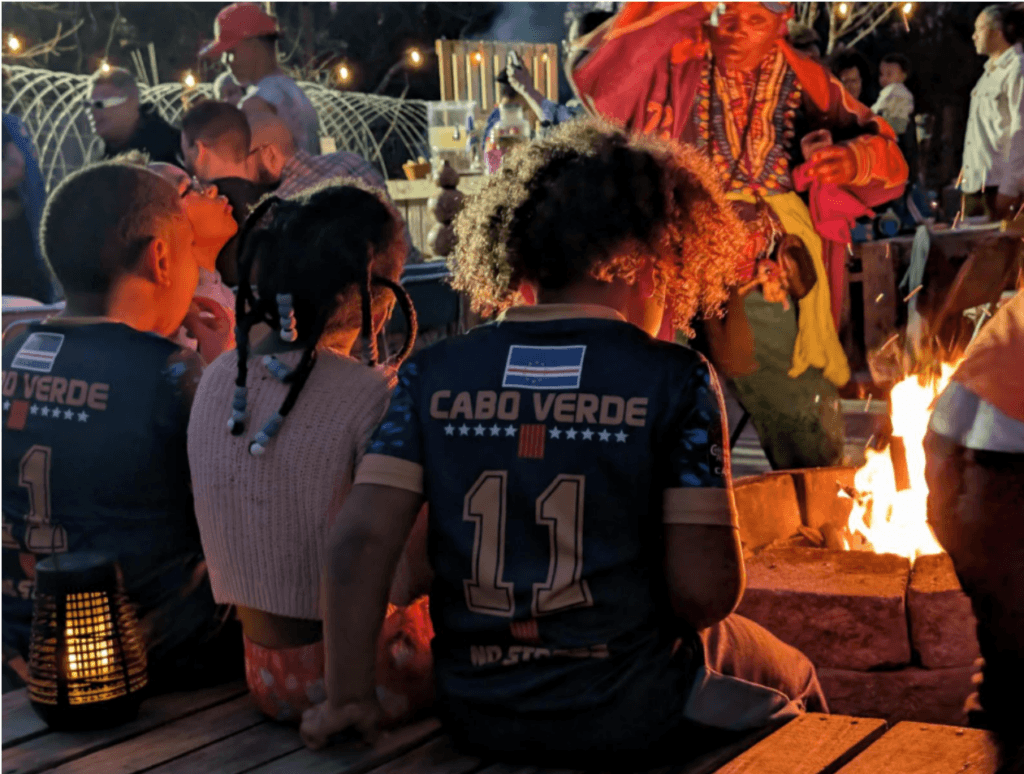
A group of children sit shoulder to shoulder on a wooden bench, their navy blue Cabo Verde soccer kits glowing in the firelight.
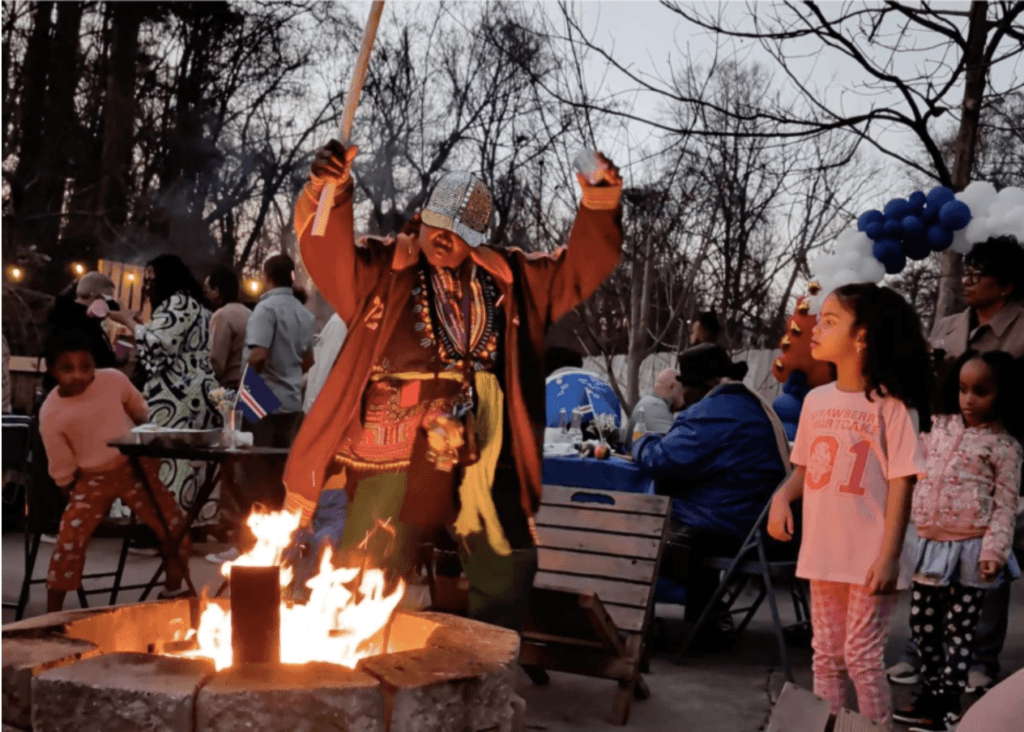
Across the flames, a guest decked out in vibrant colors grooves to the traditional beats that fill the air, telling a story through music and dance.
More people join in the dancing; bowls of simmering stew are refilled, lively conversation drifts through the backyard, and the joy is palpable. For the families and friends gathered here, this evening is about more than food and music.
It’s about community.
In the flickering light, this scene could be anywhere in the islands of Cabo Verde.
But it’s happening in Atlanta.
For the first time in history, Cabo Verde has qualified for the FIFA World Cup, marking a milestone for the island nation of just over half a million people off the coast of West Africa. When the tournament arrives this summer, thousands of fans from the archipelago and its global diaspora will travel across the world to watch their team compete on soccer’s biggest stage.
“It’s a dream come true,” said Alcides “Al” Vicente, Honorary Consul for Cabo Verde in Georgia. “I’m used to rooting for Portugal or Brazil. Now we finally have our own country represented.”
And the connection to Atlanta goes back further than many people realize. When the city welcomed the world for the 1996 Olympic Games, Cabo Verde proudly raised its flag at the Olympics for the first time.
Now, nearly three decades later, they will return to the same city for another milestone – its first appearance in the FIFA World Cup.
Cabo Verde’s early Olympic delegations were small but symbolic. Athletes competed in events like track and field, boxing, and wrestling – disciplines where individual determination mattered as much as national resources. The athletes did not arrive as favorites, but as representatives of a nation eager to stand alongside the rest of the world.
For a young nation that had gained independence only two decades earlier, the moment wasn’t about medals.
It was about being seen.
Marching in the opening ceremony was a milestone in itself. The country gained independence from Portugal in 1975, and participation in the Olympics represented another step toward international recognition.
That summer in Atlanta, athletes from Cabo Verde competed alongside the world’s largest sporting powers. They competed hard, but what mattered most was visibility. Seeing their country’s flag among the nations of the world and hearing its name announced on the Olympic stage.
Three decades later, both places have changed in meaningful ways. Cabo Verde has continued building its presence in global sports, while Atlanta has grown into one of the most diverse and internationally connected business hubs in the United States.
But now, back to the neighborhood. Before the music turned up, the backyard already smelled of wood smoke and slow-cooked stew. Large pots simmered over open flames while the honorary chefs stirred patiently. Inside one pot was cachupa, Cabo Verde’s national dishcachupa, Cabo Verde’s national dishVerdean – a rich stew made from hominy corn, beans, vegetables, and marinated meat or fish. Nearby, another pot held jagacida, a flavorful dish of rice and beans often mixed with pork or linguica sausage.
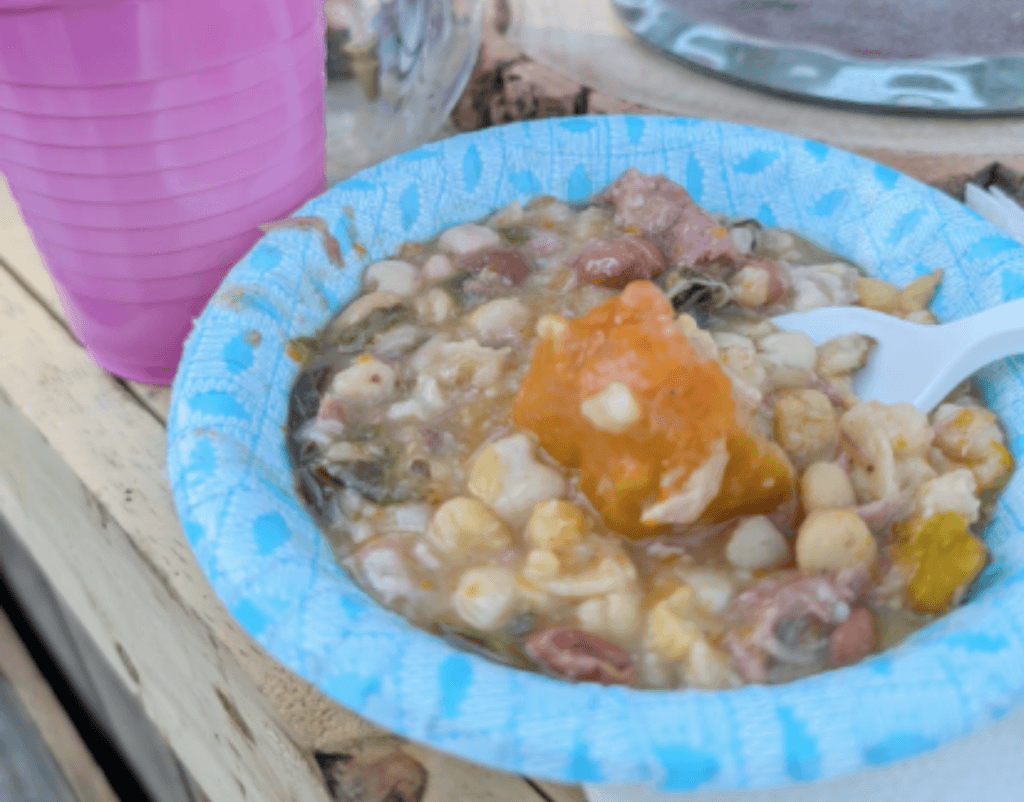
The food had been cooking for hours. “That’s the secret,” said Gy DosAnjos, slowly stirring the contents of a pot. “You cook it outside, over wood. It tastes better. It tastes smoky. “A woman in a Cabo Verdean dress nearby smiled and added with a laugh, “Everything he does, he does with love.” For DosAnjos, cooking is about more than feeding people. “When you cook with love,” he said, “you can do everything.”

Nearby, trays of homemade pudim, a creamy caramel dessert, were dropped off by another guest, well-known for her baking skills. A cheer of appreciation momentarily drowned out the music.
As the rhythm of someone’s drum picks up near the fire, more people gather around the yard. Some clap. Others dance. Children drift between the fire pit and the dance floor in their Blue Sharks kits.
For Vicente, the moment the team qualified still feels surreal.
He and his wife were watching the World Cup draw when Cabo Verde appeared on the screen. Excitement filled the room. Then came the matchup.
Spain – the tournament’s top seed.
“We play whoever is in front of us,” Al said with a little laugh. “It’s sort of biblical – David versus Goliath.”
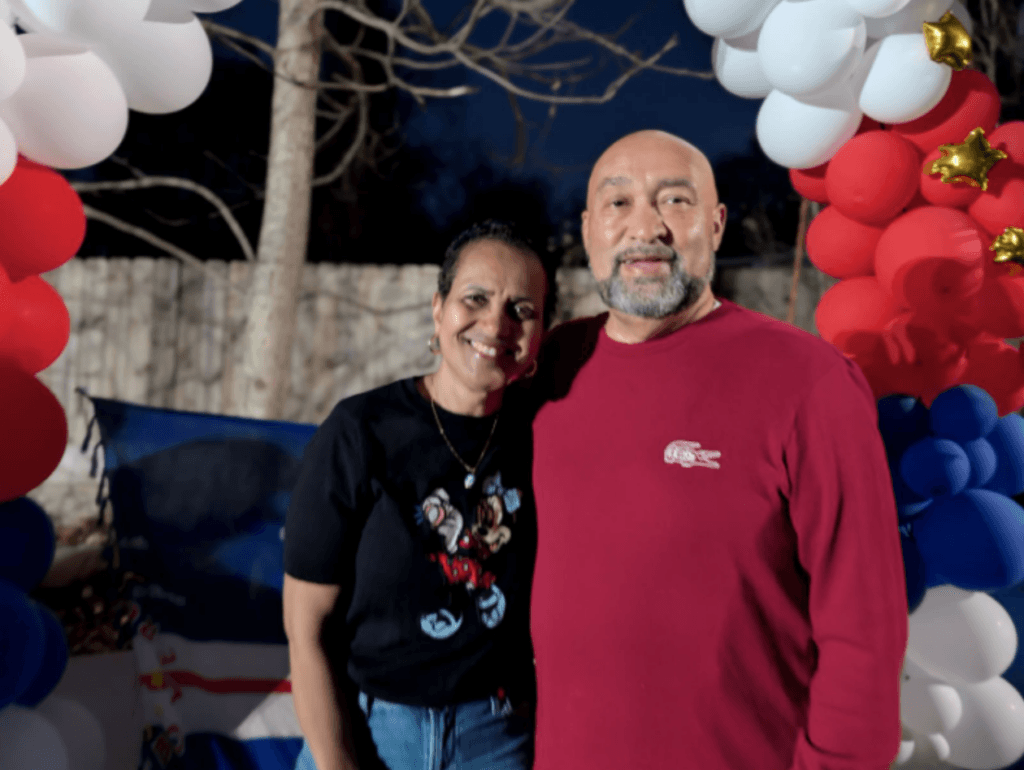
For a nation of small volcanic islands scattered across the Atlantic Ocean, reaching the World Cup carries meaning far beyond the field. “When you’re a small country, you hold on to anything that puts you on the world map,” he said.
Much like the Olympic debut decades earlier, the significance lies in representation.
The World Cup offers a different stage, one watched by billions, but the emotional meaning is similar: a chance for the country’s name, flag, and culture to be recognized around the world.
Despite its small population, Cabo Verde’s global footprint is surprisingly large.
“There are actually more Cabo Verdeans living in the United States than living in Cabo Verde,” Vicente said.
For decades, the largest populations have been concentrated in New England cities like Boston, New Bedford, and Providence. But in recent years, the community has steadily grown in metro Atlanta. Al Vicente estimates roughly 500 to 600 Cabo Verdeans now live in the region, with more arriving each year.
“A lot of the people moving here are younger people,” he said. “They’re coming for jobs, for school, for opportunity.”
But another reason is mentioned often. “The weather,” Vicente said, a bigger laugh this time. “People from Cabo Verde come from a tropical environment. When they move to the Northeast, that first winter, they ask themselves, ‘Did I make the right move?’ In Atlanta, they don’t have that problem.”
Atlanta’s history has played a role, too.
The city’s evolution over the past thirty years has also helped attract new communities. Since 1996, metro Atlanta has grown dramatically in both population and diversity, becoming a hub for international residents, entrepreneurs, and students from around the world.
For many newcomers, it is a place where cultures mix easily, and new communities can take root.
“The fact that the Civil Rights movement started here makes people feel welcomed,” Vicente said. “People of color feel comfortable here.” That sense of belonging is part of why gatherings like this one matter.
“Cape Verdeans in general are tight in the community,” said Carmen De Pina Gere, another attendee enjoying the festivities. “Wherever we go, we find each other and gather to eat our traditional foods and celebrate.”
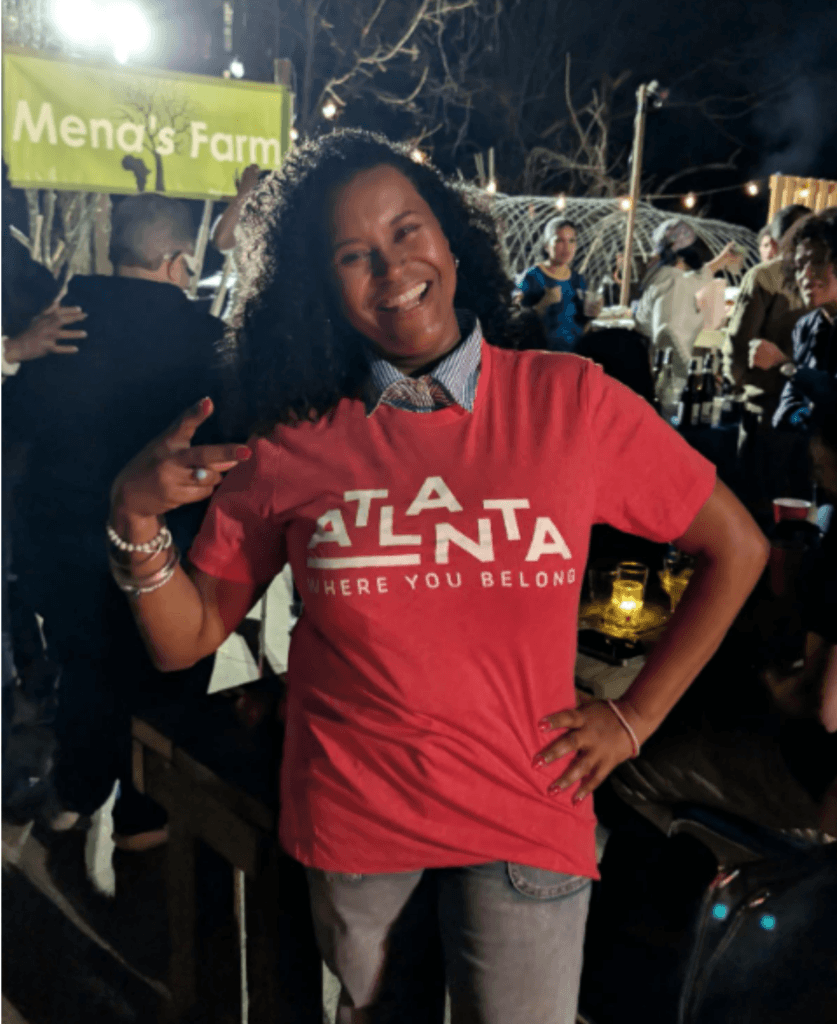
Events like this one recreate the feeling of home. “It’s nostalgic,” she said. “You get a taste of what you’re missing from back home.”
Across the yard, the music grows louder. Cabo Verdean music, shaped by African, Portuguese, and Caribbean influences, carries a deeply rhythmic sound.
“You don’t even have to understand the lyrics,” Vicente explained. “The rhythm makes your body move.”
Children watch from the benches near the fire, their faces catching the soft glow. Printed across the bottom of the CV kits are the words “NO STRESS”.
Vicente noticed this trend recently during one of his many visits back to Cabo Verde. “You’re seeing a lot more kids wearing the national team kits in the streets,” he said. Even his youngest family member has joined in. “My two-year-old grandson walks around in his jersey, and people shout, ‘Blue Sharks! Blue Sharks!’”
For children growing up in the diaspora, the World Cup represents something powerful.
Recognition.
Representation.
And pride.
For some older members of the community, the moment carries echoes of that Olympic debut decades earlier. The stage is different, but the feeling is familiar.
As the night goes on, the fire burns lower, but the energy in the yard does not.
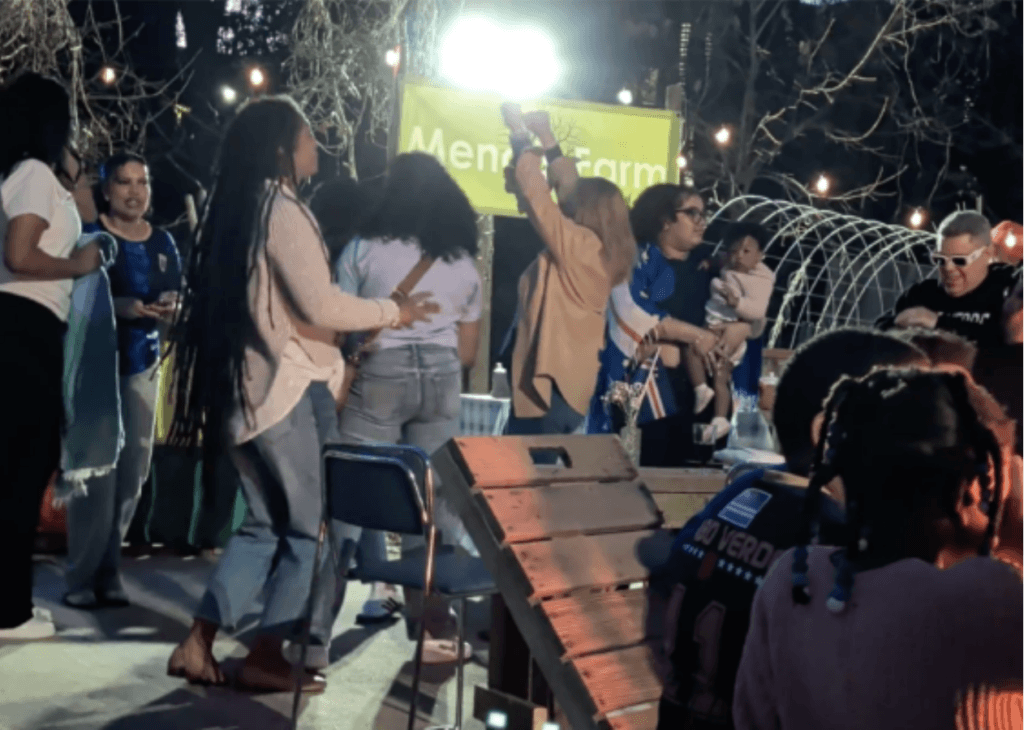
Music still plays. Plates fill again with cachupa and jagacida. Friends and families discuss plans for more events during the tournament, and of course, attending the match.
Some debate the team’s chances against Spain. Others simply beam with pride at the thought of seeing their country walk out onto that pitch, for all the world to see.
Neilson, a Cabo Verdean living in Atlanta for ten years, studies the scene happily.
“Everywhere I go people ask what Cabo Verde is,” he says. “So, we’re always educating people about where we’re from.”
For this tiny island nation across the ocean, reaching the World Cup is already a victory.
But here in Atlanta, it means something more.
Soon, the question won’t be where Cabo Verde is – but how far it will go.

